Digital Experience & UX
Research-led interfaces that people with a wide range of abilities and devices can complete tasks in, first time.
The problem we are asked to solve
Why teams bring this to us
Citizen and patient-facing interfaces get judged against consumer apps, but they have to work for people using assistive technology, older devices and limited connectivity, often under real time pressure — accessibility that arrives as a pass at the end fails the people who depend on the interface most.
What ABM delivers
Scope you can plan around
Research-led design
Task-focused interfaces validated with the people who will actually use them, not just internal review.
Accessibility built into the build
Semantic markup, keyboard operability, visible focus and assistive-technology testing during build, with findings tracked like any other defect.
Designed for real conditions
Time pressure, older devices and limited connectivity accounted for, not just the demo environment.
Suitable organizations
Where this service fits
- Government agencies building citizen or staff-facing applications, renewals or case-handling interfaces
- HealthTech teams designing patient, member or provider experiences
- Teams that need WCAG 2.2 AA verified with assistive-technology testing, not assumed
Delivery approach
How the engagement runs
Understand
We map the systems, the people who depend on them and the constraints you actually work within — procurement, policy, budget cycles.
Design
We agree the target architecture and the user experience, then prove the risky parts early with prototypes rather than documents.
Build & Integrate
Delivery happens in reviewable increments, with integration to existing systems treated as part of the build, not a final step.
Operate & Improve
We monitor, support and keep improving what is live, and we document it so your team can run it without us.
Relevant technologies
Tools we work in
Listed because we use them, not for keyword coverage.
- React
- Next.js
- Vue.js
- HTML
- CSS
- JavaScript
Security considerations
How we protect the work
Least-privilege access to any admin/CMS tooling built, dependency scanning and documented incident response.
Accessibility considerations
How we keep it usable
Semantic markup, keyboard operability, visible focus and assistive-technology testing during build, with findings tracked like any other defect — WCAG 2.2 AA as the consistent target.
Related industries
Sector context for this service
Government Technology
Legacy systems of record still run essential programs, while residents and staff expect services that work on a phone and meet accessibility law.
Explore Government Technology ServicesHealthTech
Patient, member and provider experiences depend on data held in clinical, claims and administrative systems that were never designed to talk to each other.
Explore HealthTech Software Development
Case study
Related work
 HealthTech
Aster DM Healthcare
- Problem
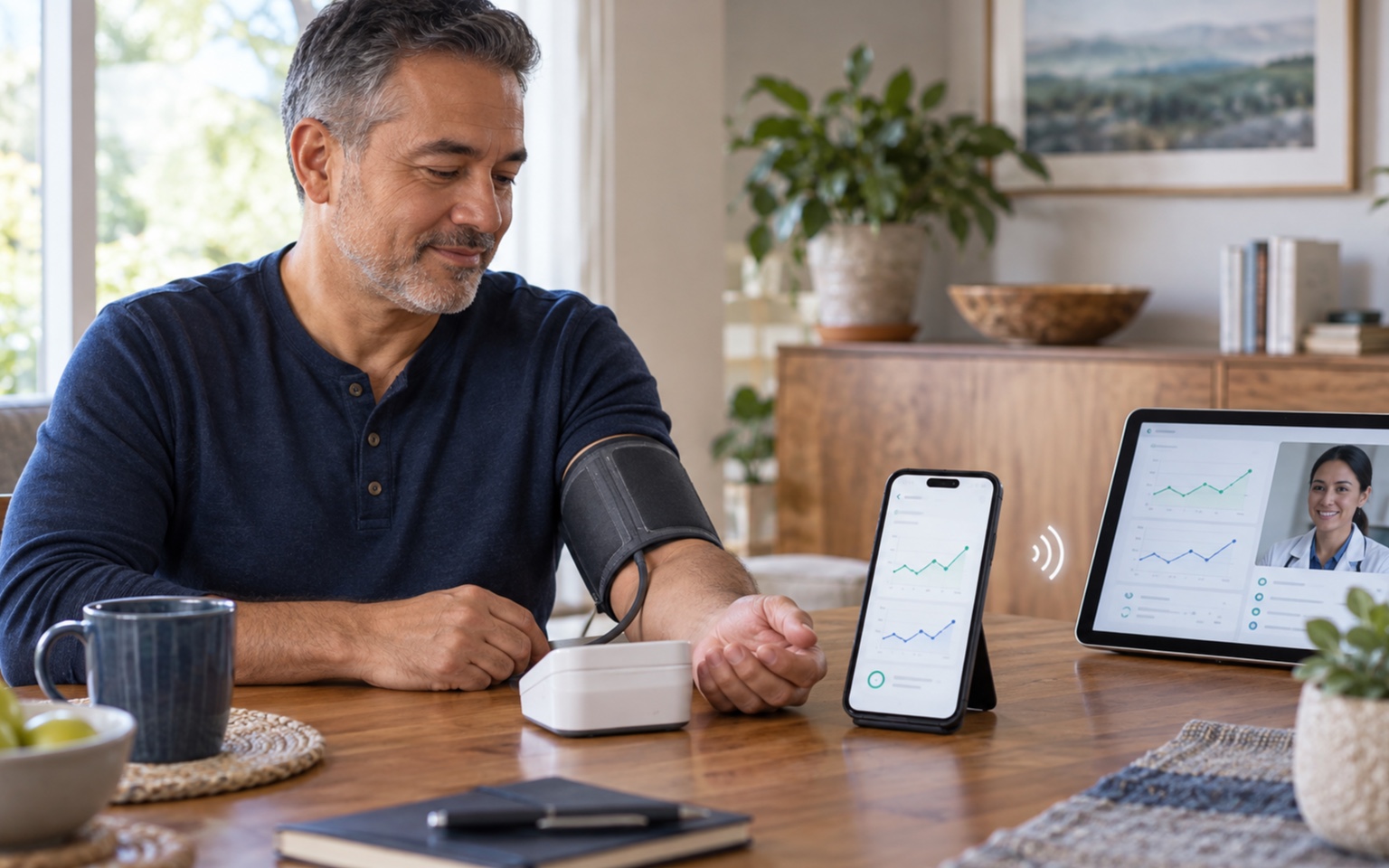
- Aster DM Healthcare wanted patients enrolled in its Aster Chronic Care program (diabetes, hypertension and other chronic conditions) to track their health from home, but needed reliable communication between Bluetooth medical devices and mobile phones, first-mover speed to market, and a product ready to scale to millions of existing Aster Healthcare customers.
- Verified result
- Patients can track and analyze blood-pressure and glucose readings directly in the app; intelligent business reports help doctors reach a more accurate diagnosis; and the platform integrates with BP and blood-glucose devices from other manufacturers.
Buyer questions
Questions we are asked before a contract
Let's modernize what matters
Tell us about the systems, products, integrations or operational challenges in front of you. A specialist will read it and reply with a considered next step — not a sales sequence.